
Manuel Antonio Park is a must-see on any trip to Costa Rica. Today’s opportunity to talk to you about the local fauna!
The Manuel Antonio Park
Manuel Antonio Park, covering almost 700 hectares, is one of Costa Rica’s most popular tourist destinations.
In fact, it was built in response to this demand and the influx of tourists from all over the world who came to discover the park’s biodiversity, and the authorities decided to protect the area. A number of measures have thus been implemented. Within the park, for example, it is forbidden to feed the animals in order to preserve their autonomy.
We ask our customers to strictly observe this rule so as not to modify the animals’ behavior. Unfortunately, it has now been proven that some monkeys suffer from cholesterol linked to the ingestion of potato chips and other human food given or left in the park by unscrupulous tourists.
In addition to its paradisiacal beaches, Manuel Antonio Park is home to some very special animals in its rich, dense forest.
Here’s a closer look at some of the most fascinating: Saimiri monkeys, basilisk lizards, parasol ants and sloths…
Squirrel monkeys or Saïmiri
The squirrel monkey, Costa Rica’s smallest primate, is considered vulnerable by the IUCN (International Union for Conservation of Nature) and there are only around 4,000 individuals left on the planet, including 1,500 in Manuel Antonio. In Costa Rica, they can be seen in Manuel Antonio and Corcovado, their two favorite areas. The Saimiri, which inhabit Manuel Antonio Park, are the species with the largest brains relative to their weight: 5%, compared with 2% for humans.
Most of this brain is used for agility, between movement and sight. As a result, they have outstanding abilities in branches and all kinds of acrobatics. These monkeys also have impressive communication skills. At any moment, they can send messages to each other, such as a change in the weather or the existence of a threat.
Basilisk lizards
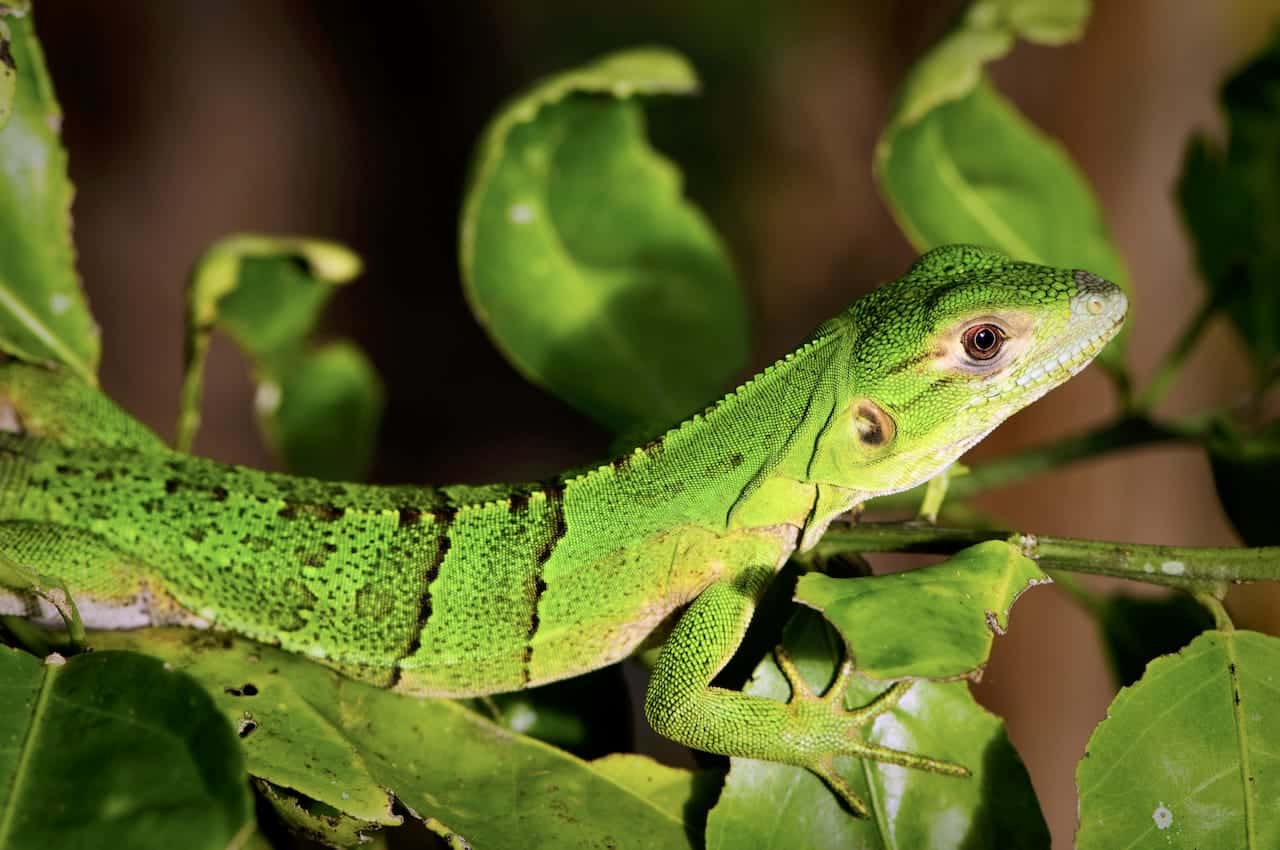
Basilisk lizards (Basiliscus plumifrons) are a very unusual species. These small lizards, usually living by the water, are also known as “Jesus Christ lizards”. Indeed, their lightness and vivacity enable them to move extremely quickly when threatened, and to walk on water at over 7.5 miles per hour. They generally perch on branches above the water, and their ability to move in water enables them to escape danger.
The basilisk lizard seems to have emerged straight from prehistory, and the color of its eyes, orange or yellow, gives it such a strange look that we can understand why mythology refers to it as a fabulous being, half rooster, half reptile, and why it was the object of superstitions in the Middle Ages. He was said to have the power to poison and petrify his victims.
Leaf-cutting ants

Ants are particularly numerous in Costa Rica. Mushroom ants (Atta Colombica) are surely the most unusual species. Their processions resemble a religious rite. They form incredible little green paths: thousands of ants carry pieces of leaf which they store in the anthill and use as fertilizer for the mushrooms they feed on. The rainforest is partly maintained by these incessant workers.
Personally, I don’t much appreciate them in my garden, because in less than 30 minutes, they destroy my Sunday plantings 🙁
The dwarf boa
Half of Costa Rica’s 230 reptile species are snakes. The most fascinating of these is undoubtedly the boa constrictor or soothsayer boa. They attack their prey by wrapping themselves around it to suffocate it. But not all boas are gigantic: there are also dwarf boa constrictors, Costa Rica’s smallest snakes, measuring just a few dozen centimetres.
It’s hard to believe that they’re just cousins to the several-metre boas that populate Central America.
The dwarf boa loves the sun and can wait for hours before finding something to suit its feet, or rather, its size… It is generally content with small mice or fledglings, whereas classic boas prefer fawns or wild boar.
The sloth
Manuel Antonio is home to a large number of two-toed Hoffman’s sloths. Around 1,500 at last count.

This strange, aptly-named animal moves so slowly that you’re unlikely to lose sight of it. In fact, it’s considered the slowest animal in the world! This slowness is linked to a particularly low metabolism.
It spends 80% of its time hanging upside down from a branch, and the rest of the time feeding, mating and moving to defecate just once a week or change trees. This process sometimes takes several hours.
Many other species inhabit the park (109 species of mammals and 184 species of birds), and you’re bound to come across mapache (raccoons), capuchin and howler monkeys, coatis, agoutis, deer, and on the bird side, the Manuel Antonio forest is home to toucans, green woodpeckers, motmot, tanagers…
Forbes magazine ranked the park among the 12 most beautiful in the world.
PLEASE NOTE: access to the park is now limited to 600 visitors/day, so plan ahead and buy your ticket in advance.
Découvrez d’autres articles de blog


Pourquoi voyager avec nous ?

Une réputation sans faille depuis 2008

Un seul interlocuteur en français

Notre présence toute l’année sur le terrain

Notre expertise pour une offre sur mesure
Nos clients ont la parole
 Trustindex vérifie que la source originale de l'avis est Google.5 days agoNous revenons d’un voyage de 15j organisé par Costa Rica découverte absolument merveilleux ! Des les premiers appels, Susana a su prendre en compte nos envies et nous organiser un voyage sur mesure. Les lieux, les visites et les logement étaient tous parfaitement choisis, certains proposant même des prestations qu’on ne trouve nulle part ailleurs. Une fois sur place, l’agence est disponible 24/24 si nous rencontrons le moindre problème. Nous recommandons Costa Rica découverte à 100%.+4Trustindex vérifie que la source originale de l'avis est Google.7 days agoTrès beau pays et bel accompagnement de Costa Rica Découverte. Libéré de la contrainte d'organisation du voyage, il ne nous reste plus qu'à profiter de la nature généreuse du Costa Rica.Trustindex vérifie que la source originale de l'avis est Google.7 days agoTrès bien accompagné sur tout 'e voyage. Parcours sur mesure. De belles rencontres et découvertesTrustindex vérifie que la source originale de l'avis est Google.8 days agoUn grand merci à TERESA qui a su répondre à toutes nos attentes pour nous confectionner un voyage sur mesure où nous avons été de découvertes en enchantements avec mes deux enfants de neuf et 10 ans!! Pays incroyable Agence très sérieuse je recommande les deux!! ❤️+6Trustindex vérifie que la source originale de l'avis est Google.10 days agoNous venons de passer 2 semaines au Costa Rica et revenons enchantés de notre séjour. Sur recommandation, nous sommes passés par COSTA RICA DECOUVERTE et nous en avons été pleinement satisfaits, du début à la fin. Cette agence a été à notre écoute dès la conception du projet, n’hésitant pas à modifier leur devis en fonction de nos souhaits et également de notre vol, que nous avons dû prendre nous-mêmes. Une fois sur place, ils ont de suite pris contact avec nous et ont été très réactifs à nos demandes tout au long du séjour, n’hésitant pas à prendre de nos nouvelles. Un point a également été fait à notre retour. Les hôtels sélectionnés étaient top et le guide français, Pierre Quantin, que nous avons eu lors d’une excursion était génial. Un plaisir de l’entendre parler de la faune et de la flore. Le seul point négatif, s’il faut en trouver un, est que nous n’avions pas systématiquement un guide francophone. Nous ne pouvons que recommander cette agence et n’hésiterions pas faire appel à nouvelle à elle si l’occasion se présentait.+27
Réponse du propriétaire
Un grand merci Hervé pour ce témoignage si complet et pour votre confiance ! Nous sommes ravis que vous ayez apprécié notre écoute, notre flexibilité et notre accompagnement avant, pendant et après votre séjour. C’est justement ce qui fait la force d’une agence locale : pouvoir s’adapter à chaque voyage et rester présents à chaque étape. Quel plaisir également de savoir que les hôtels et l’excursion avec Pierre vous ont particulièrement plu ! 🦥 Nous prenons bien sûr en compte votre remarque concernant les guides francophones. Nous faisons toujours au mieux pour les privilégier, selon les régions et les activités, mais certains services ne sont malheureusement pas disponibles en français partout. Merci encore pour votre recommandation et nous serions ravis de vous accompagner à nouveau pour une prochaine découverte du Costa Rica ! 🇨🇷Trustindex vérifie que la source originale de l'avis est Google.11 days agoSuper séjour sur mesure organisé par l'équipe de Costa Rica Découverte et un grand merci à Maëlle pour nous avoir sorties d'une galère imprévue. De belles rencontres au cours de ces vacances avec les costaricains et la faune ... Ghislaine et Eugénie.+3
Réponse du propriétaire
Un grand merci Ghislaine et Eugénie pour votre confiance et ce joli témoignage ! Nous sommes ravis que ce voyage sur mesure vous ait permis de faire de belles rencontres, avec les Costariciens comme avec la faune du pays. Et surtout, heureux d’avoir pu être à vos côtés pour vous sortir de cette galère imprévue ! 😊 C’est aussi ça, notre rôle de partenaire local : être présents quand vous en avez besoin. Au plaisir de vous revoir au Costa Rica ! 🇨🇷Trustindex vérifie que la source originale de l'avis est Google.12 days agoJe recommande les yeux fermés cette agence qui nous a permis de passer un séjour inoubliable de 2 semaines cet été au mois d’août. On aura eu de la pluie sur la côte Caraïbe mais le reste du temps était largement correct côté météo. Côté organisation une équipe super disponible, tout était super bien organisé ! Les premières vacances sans charge mentale en mode total Pura Vida. Les kids ont adorés voir cette nature dépaysante, les animaux extraordinaires ! Si vous voulez vivre la Pura vida, Costa Rica Découverte est votre meilleur atout pour des vacances inoubliables. Merci pour tout !
Réponse du propriétaire
Quel bonheur de savoir que vous avez pu profiter de vos vacances en famille en mode « Pura Vida », sans charge mentale ! C’est exactement ce que nous souhaitons offrir : une organisation fluide, une équipe disponible et un voyage pensé pour que chacun puisse simplement profiter. Et quel plaisir de savoir que les enfants ont adoré la nature et les animaux du Costa Rica ! 🦥🦜 Merci pour votre confiance et cette belle recommandation. Au plaisir de vous revoir pour une nouvelle aventure « Pura Vida » ! 🇨🇷Trustindex vérifie que la source originale de l'avis est Google.17 days agoCosta Rica Découverte nous a accompagné du début jusqu'à la fin de notre voyage d'une manière dédiée (et mêmeavantet après). Nous avons ressenti que nous étions des VIPs. Soucieux de nous suivre tout au long du séjour et réactif, ils communiquent par WhatsApp et leurs réponses sont presque instantanées. Et pour la préparation, ils n'oublient rien. Tout l'organisation du voyage était impeccable. Ils ont largement dépassé toute attente !
Réponse du propriétaire
Un immense merci pour ce témoignage ! Nous sommes particulièrement touchés que vous vous soyez sentis comme des VIP. Pour nous, c’est essentiel : chaque voyage et chaque voyageur sont uniques, et méritent une attention personnalisée, avant, pendant et après le séjour. Disponibilité, réactivité et souci du détail sont au cœur de notre accompagnement pour que vous puissiez voyager l’esprit serein. Merci pour votre confiance et au plaisir de vous revoir au Costa Rica ! 🇨🇷Trustindex vérifie que la source originale de l'avis est Google.18 days agoUn voyage a la carte extraordinaire...ce fut un moment magique, le choix des lieux, des hôtels, des guides qui ont partagé l'amour de ce pays et la passion avec laquelle ils l'ont fait. Si je devais juste donner mon opinion sur la fin du voyage, nous avons pris un hôtel a San José le dernier soir à la place de celui proposé vers Uvita, et cela a permis d'être moins pressés , le retour a été moins stressant. Après tant de nature, un passage par la ville nous permis une transition plus douce Merci a Costa Rica découverte. Leur présence en filigrane fût agréable et efficace a plusieurs reprises.
Réponse du propriétaire
A la carte et sur-mesure :) Quel plaisir de savoir que ce voyage vous a offert de si beaux moments et que vous avez apprécié le choix des lieux, des hôtels et surtout la passion de nos guides. Nous sommes également ravis que votre dernière nuit à San José ait permis une transition plus douce et un retour plus serein. C’est exactement l’intérêt d’un voyage sur mesure : pouvoir adapter le parcours pour qu’il corresponde au mieux à votre rythme et à vos envies. Merci pour votre confiance et au plaisir de vous accompagner pour une prochaine découverte du Costa Rica !Trustindex vérifie que la source originale de l'avis est Google.20 days agoAgence sérieuse bien implantée et connectée dans le pays. Bonne communication et réactivité pendant le séjour. Encore merci pour l'organisation de ce beau voyage en famille!
Réponse du propriétaire
Bonjour ! Nous sommes ravis d’avoir contribué à la réussite de votre voyage en famille. Notre présence locale, notre connaissance du terrain et notre réactivité sont justement au cœur de notre accompagnement. Belle continuation à vous et peut être à bientôt pour un prochain voyage !Trustindex vérifie que la source originale de l'avis est Google.21 days agoPersonnel attentionné, à l'écoute, et très réactif lorsque nous avons eu besoin de conseils. Je recommande!
Réponse du propriétaire
Merci beaucoup Sandrine pour votre confiance et votre recommandation ! Nous sommes ravis d’avoir pu vous accompagner avec attention et réactivité tout au long de votre voyage. C’est un vrai plaisir de savoir que vous avez apprécié notre disponibilité et nos conseils. Au plaisir de vous retrouver pour une prochaine découverte du Costa Rica !Trustindex vérifie que la source originale de l'avis est Google.22 days agosuper expérience avec Costa Rica Découverte aussi bien sur la préparation du voyage que sur place avec des ajustements de dernière minute
Réponse du propriétaire
Un grand merci pour votre retour ! Nous sommes ravis que vous ayez apprécié notre accompagnement, aussi bien dans la préparation que sur place. Flexibilité, adaptation et sur-mesure sont au cœur de notre façon de travailler, afin de pouvoir ajuster le voyage au plus près de vos envies, même au dernier moment. Merci pour votre confiance et au plaisir de vous revoir au Costa Rica !Trustindex vérifie que la source originale de l'avis est Google.24 days agoVoyage en famille: 2 adultes, 2 enfants Durée: 16 jours, 15 nuits Date: Juillet 2026 Nous avons choisi l'agence Costa Rica Découverte grâce à nos recherches sur Google/Instagram et la collaboration a été un franc succès. Sandrine a su comprendre rapidement nos envies et les organiser en fonction de la configuration de notre famille. Ses choix d'hôtels et d'activités ont été très bons. Le gros plus est que l'agence est locale et connait donc réellement les lieux / les prestataires pour les visiter régulièrement. L'agence optimise également votre trajet en supprimant les temps morts que l'on peut avoir entre 2 étapes par exemple. Ce qui est difficile à faire par soi même lorsque l'on ne connait pas le pays. Ce voyage restera une très belle expérience en famille avec des souvenirs pour la vie. Nous recommandons à 200%.
Réponse du propriétaire
Un grand merci pour ce magnifique témoignage ! Nous sommes ravis que Sandrine ait su comprendre vos envies et créer un voyage adapté à toute votre famille. Notre connaissance du terrain et nos relations avec nos partenaires locaux nous permettent de vous proposer un itinéraire fluide, personnalisé et sans temps morts. Quel bonheur de savoir que vous repartez avec de beaux souvenirs en famille ! Merci pour votre confiance et votre recommandation à 200 % ! Pura Vida !!😊Trustindex vérifie que la source originale de l'avis est Google.24 days agoNous avons passé un excellent séjour au Costa Rica, plein d'aventures et de rencontres. Costa Rica Découverte a su être à notre écoute pour nous proposer un séjour fabuleux nous faisant découvrir les merveilles de ce pays tout en répondant à nos envies et besoins en famille avec enfants en bas âge ! Un service très professionnel, efficace et bienveillant que nous recommandons vivement !
Réponse du propriétaire
Avec grand plaisir Julie, nous avons été très contents de vous accompagner pour ce beau voyage. En espérant vous revoir sur nos terres tropicales !Trustindex vérifie que la source originale de l'avis est Google.25 days agoExcellente organisation. Accueil impeccable.
Réponse du propriétaire
Merci pour votre gentil mot, belle continuation à vous et peut être à bientôt pour de nouvelles aventures Ticas !Trustindex vérifie que la source originale de l'avis est Google.25 days agoMerci pour ce super voyage ! Merci pour votre accompagnement des préparatifs jusqu'à la fin du voyage.
Réponse du propriétaire
Avec grand plaisir ! Nous espérons que vous garderez longtemps de merveilleux souvenirs du Costa Rica ! Pura Vida ;)Trustindex vérifie que la source originale de l'avis est Google.26 days agoNous avons fait appel à Costa Rica Découverte pour organiser notre séjour de 2 semaines en famille. La préparation du voyage a été faite par Sandrine avec une grande efficacité, elle a su répondre et s’adapter à toutes nos demandes (et modifications) avec bienveillance. Faire appel à une agence locale, mais parlant français et disponible 24/24 et 7/7, nous a rassuré. L’équipe est toujours disponible et rassurante au moindre problème (un souci médical, ils gèrent). L’organisation était parfaite, le rythme entre chaque étape était équilibré (détaillé dans le roadbook), la location de voiture (avec assurances) appréciable, les hôtels/hébergements tous fabuleux, les activités incroyables (mention spéciale à Pierre Quantin à Mystico). Un grand merci à toute l’équipe pour ce fabuleux voyage qui nous a permis de découvrir le Costa Rica en toute tranquillité.+6
Réponse du propriétaire
Un grand merci pour ce très beau retour ! 🌿 Nous sommes ravis que votre voyage en famille, préparé avec Sandrine, ait répondu à toutes vos attentes et que vous ayez apprécié notre accompagnement tout au long du séjour. Votre confiance et vos gentils mots sur notre équipe nous touchent particulièrement. Nous transmettrons également votre mention à Pierre Quantin ! 😊 Merci pour le partage de vos superbes photos ! Au plaisir de vous retrouver pour une prochaine découverte du Costa Rica 🇨🇷💚Trustindex vérifie que la source originale de l'avis est Google.27 days agoMerci à Costa rica découverte et à Sandrine pour nous avoir préparé superbe voyage. Sandrine nous a très bien cerné suite à nos échanges préalables. Le chois des activités et des étapes étaient parfait. Nous espérons retourner bientôt au Costa rica et nous sollicitrons Costa rica découverte pour de nouvelles aventures ds ce merveilleux pays Encore un grand Merci.+12
Réponse du propriétaire
Un grand merci pour votre confiance ! 🌿 Nous sommes ravis que Sandrine ait su cerner vos envies et vous proposer un voyage à votre image, avec des étapes et activités qui vous ont pleinement satisfaits. Nous passons le mot :) Ce sera un vrai plaisir de vous accompagner à nouveau pour de nouvelles aventures au Costa Rica ! 🇨🇷✨Trustindex vérifie que la source originale de l'avis est Google.28 days agoJe recommande fortement l’agence Costa Rica découverte, ils sont très à l’écoute pour l’organisation de votre voyage en fonction de vos attentes et votre budget. Sur place il est possible de les contacter à n’importe quel moment en cas de besoin et répondent très rapidement. Nous sommes ravis du circuit qui nous a été proposé en fonction de la saison. Les guides pour les visites étaient passionnés et la plupart du temps francophone. Un grand merci à toute l’équipe et bravo pour votre professionnalisme !!! Pura Vida+6
Réponse du propriétaire
Un grand merci pour votre recommandation et pour ce retour qui nous fait très plaisir ! 🌿 Nous sommes heureux que le circuit, les guides et notre accompagnement sur place aient été à la hauteur de vos attentes. Ce fut un plaisir de vous accompagner ! Un grand merci aussi pour ce partage de photos, elles sont très belles ! Toute l’équipe apprécie particulièrement vos compliments sur notre professionnalisme. Au plaisir de vous revoir au Costa Rica pour une nouvelle aventure… Pura Vida ! 🇨🇷😊Trustindex vérifie que la source originale de l'avis est Google.28 days agoUne organisation et un accompagnement clients au top, un programme correspondant à nos attentes, que demander de plus, un peu moins de pluie ! (Juillet 2026)+4
Réponse du propriétaire
Merci pour votre retour ! 🌿 Nous sommes ravis que l’organisation et l’accompagnement aient été à la hauteur de vos attentes. Et pour la pluie… elle fait partie de l’aventure ! 🌧️ C’est aussi grâce à elle que le Costa Rica offre cette nature si luxuriante et ces paysages d’un vert incroyable. 💚 Mais nous vous entendons :) Merci également pour le partage de photos magnifiques !! Au plaisir de vous retrouver pour une prochaine découverte, peut-être sous quelques rayons de soleil en plus ! 🇨🇷☀️Trustindex vérifie que la source originale de l'avis est Google.29 days agoNous rentrons enchantés de notre voyage au Costa Rica ! Arnaud et son équipe ont su répondre parfaitement à nos attentes en terme de découvertes comme d’hébergement ou de logistique. Les échanges ont toujours été simples et fluides. Tout était bien organisé, le rythme des étapes bien calculé, le véhicule bien adapté et les logements étaient toujours de belles surprises pleines de charme au sein de la nature ! L’équipe a aussi été très disponible lorsque notre fille s’est blessée et que nous avons eu besoin d’un interprète. C’était très rassurant de les savoir à nos côtés. Nous n’aurions pas fait un voyage aussi riche et instructif sans leur connaissance du pays.
Réponse du propriétaire
Quel plaisir de savoir que vous rentrez enchantés de votre découverte du Costa Rica ! 🌿 Nous sommes heureux qu’Arnaud et toute l’équipe aient pu vous accompagner dans chaque étape de ce beau voyage, jusque dans les moments plus imprévus. Votre confiance et vos mots sur notre disponibilité nous touchent particulièrement. C’est aussi notre rôle d’être présents lorsque vous en avez besoin, pour que vous puissiez profiter pleinement de votre séjour. Merci pour votre confiance et au plaisir de vous retrouver pour une prochaine aventure costaricienne ! 🇨🇷💚Trustindex vérifie que la source originale de l'avis est Google.30 days agoNous sommes rentrés il y a maintenant un peu plus d'une semaine après avoir passé 3 semaines et demi au Costa Rica. Avec nos deux garçons de 11 et 13 ans, nous avons vécu un séjour hors du commun, chaque endroit nous révélant des merveilles. Nous y avons ainsi vu une nature fascinante, mais aussi énormément d'animaux de toutes sortes et surtout rencontré des gens super sympas, accueillants et souriants… et ça, c’était tous les jours! Pura Vida! Alors pour ce voyage extraordinaire qu'on a pu vivre en famille, qui restera gravé dans nos mémoires (et dans mon ordinateur, avec plus de 20'000 photos!), un immense MERCI à Costa Rica Découverte! Merci à Arnaud qui - après un coup de téléphone il y a plusieurs mois pour cerner nos envies et nos passions - a su organiser un séjour qui nous a convenu et nous a correspondu en toutes choses. Merci pour l'accueil sur place, le suivi, les conseils et le carnet de voyage. Tous ces éléments ont été parfaitement rassurants. Merci également pour votre réactivité quand il a fallu changer des plans à la dernière à cause de la météo capricieuse liée à El Niño sur la côte Caraïbe. Bref, pour nous : une réussite totale composée de moments intenses et inoubliables !+19
Réponse du propriétaire
Un immense merci pour ce magnifique témoignage ! 💚 Savoir que ce voyage en famille restera gravé dans vos mémoires — et avec plus de 20 000 photos, il y a de quoi ! 😄📸 — nous fait vraiment plaisir. Arnaud sera ravi de savoir que les échanges et la préparation en amont ont permis de construire un séjour qui vous ressemblait. Nous sommes également heureux d’avoir pu être présents et réactifs lorsque la météo a nécessité quelques ajustements. Merci pour votre confiance et pour avoir partagé avec nous cette belle aventure familiale. Et surtout… Pura Vida ! 🇨🇷Trustindex vérifie que la source originale de l'avis est Google.31 days agoNous sommes partis Nous sommes partis du 20 juillet au 2 août et nous avons passé un excellent séjour, même si nous avons eu beaucoup de pluie à Tortuguero, mais ine alternance de pluie et de soleil le reste du temps. Merci à l’agence Costa Rica Découverte, qui a été présente et disponible pendant tout le séjour. Un grand merci également à Pierre, qui a été génial lors de la découverte des ponts suspendus.
Réponse du propriétaire
Merci pour ce joli retour ! 🌿 Nous sommes ravis que vous ayez passé un excellent séjour et que vous ayez apprécié notre présence tout au long de votre voyage. La pluie fait partie du Costa Rica, surtout à Tortuguero ! 🌧️🌴 Elle contribue aussi à cette nature si luxuriante qui fait tout le charme du pays. Et nous ne manquerons pas de transmettre vos compliments à Pierre ! Au plaisir de vous revoir au Costa Rica pour une prochaine aventure. 🇨🇷 Pura Vida !Trustindex vérifie que la source originale de l'avis est Google.31 days agoMerci à Costa Rica Découverte pour l'organisation de notre séjour. L'accompagnement pour la préparation du voyage, les recommandations et conseils ont été précieux pour créer le voyage qui nous ressemble. La communication avec l'équipe a été excellente, tous nos interlocuteurs ont été attentifs à nos questions (nombreuses!). Bravo pour les guides (la plupart francophones) et activités sélectionnés : cela nous a permis de nous imprégner de la culture du pays, d'appréhender la nature et les écosystèmes que nous avons pu découvrir. Merci également d'avoir soigneusement sélectionné les logements : tous étaient excellents !
Réponse du propriétaire
Merci pour ce retour si complet ! 🌿 Nous sommes très heureux d’avoir pu construire avec vous un voyage qui vous ressemble, en tenant compte de toutes vos questions et envies. Vos compliments sur nos guides, les activités et les hébergements nous font particulièrement plaisir. C’est exactement ce que nous cherchons à offrir : une découverte authentique du Costa Rica, au plus près de sa nature et de sa culture. Merci pour votre confiance et au plaisir de vous revoir pour une nouvelle aventure ! 🇨🇷✨Trustindex vérifie que la source originale de l'avis est Google.32 days agoJe rentre d un séjour de 10 jours au Costa Rica , organisé par Susana de Costa Rica découverte : tout était parfait ,de l accueil à notre arrivée , au choix des hôtels et des activités . Les guides étaient vraiment formidables . Je recommande vivement cette agence qui sait écouter pour vous organiser un voyage qui vous convient parfaitement. Merci 🙏 et Pura Vida !!!+3
Réponse du propriétaire
Merci pour ce très beau témoignage ! 🌿 Nous sommes ravis que ces 10 jours au Costa Rica vous aient pleinement satisfait, du choix des hébergements aux activités et à l’accompagnement de nos guides. Susana sera très heureuse de découvrir vos compliments ! Merci pour votre confiance et votre recommandation. 😊 Merci aussi pour le partage de vos photos :) Au plaisir de vous revoir au Costa Rica… Pura Vida ! 🇨🇷✨Trustindex vérifie que la source originale de l'avis est Google.32 days agovoyage magnifique au Costa Rica organise par Costa Rica recouverte. de tres beaux hotels boutiques et de belles activités dont toute la famille a pu bénéficier. l' organisation du voyage avant le départ a été tres facile, nous avons également été tres bien encadre sur place. un grand merci!
Réponse du propriétaire
Merci pour ce très joli retour ! 🌿 Nous sommes ravis que toute la famille ait profité pleinement des activités, des beaux hôtels et de ce séjour au Costa Rica. Nous sommes également heureux que la préparation et l’accompagnement sur place aient rendu votre voyage simple et serein. Merci pour votre confiance et au plaisir de vous retrouver pour une prochaine aventure ! 🇨🇷✨Trustindex vérifie que la source originale de l'avis est Google.32 days agoSuper équipe Super suivi Super voyage
Réponse du propriétaire
Merci pour ces trois « Super » qui nous font autant plaisir ! 😊🌿 Toute l’équipe est ravie d’avoir contribué à ce beau voyage. Merci pour votre confiance et peut-être à une prochaine découverte du Costa Rica ! 🇨🇷 Pura Vida !Trustindex vérifie que la source originale de l'avis est Google.33 days agoNous sommes passés par Costa Rica Découverte sur le conseil d’amis, nous n’avons pas été déçus. L’accompagnement a été personnalisé avant le voyage, adapté selon nos envies . Tout s’est bien passé pendant le séjour, tout a été réservé comme prévu, possibilité de faire des excursions en plus si on le souhaite avec les conseils donnés sur le livret. Nous n’avons pas eu besoin de les appeler pendant le séjour, car tout était parfait, mais il reste disponible si besoin. Merci à Sandrine qui s’est occupée de notre Séjour et nous a remis en main propre les documents le jour de notre arrivée
Réponse du propriétaire
Merci beaucoup pour votre confiance, et tout particulièrement pour avoir suivi la recommandation de vos amis ! 🌿 Nous sommes ravis que Sandrine ait pu construire avec vous un séjour personnalisé et que tout se soit déroulé comme prévu. Savoir que vous n’avez pas eu besoin de nous solliciter pendant le voyage est finalement notre plus belle satisfaction : cela signifie que tout était bien en place pour vous permettre de profiter pleinement ! 😊 Merci encore pour votre confiance et au plaisir de vous revoir au Costa Rica. 🇨🇷Trustindex vérifie que la source originale de l'avis est Google.33 days agoNous avons passé un excellent séjour dans ce magnifique pays qui est le Costa Rica! L'organisation du voyage réalisée par Sandrine de Costa Rica Découverte a été impeccable et les demandes complémentaires durant le voyage ont très bien été gérées. Un tout grand merci à notre super guide et chauffeur Félix qui nous a fait découvrir de magnifiques endroits et restos durant toute la partie du séjour passée ensemble! Gracias Amigo! Merci à toute l'équipe de Costa Rica Découverte pour son professionnalisme et son dévouement! Pura Vida!
Réponse du propriétaire
Quel plaisir de lire votre retour ! 🌿 Nous sommes ravis que l’organisation de Sandrine et le suivi de l’équipe aient contribué à la réussite de votre séjour. Un grand merci également pour vos mots à l’égard de Félix : nous lui transmettrons votre message, il sera certainement ravi de savoir que vous avez apprécié ses découvertes et ses bonnes adresses ! 😊 Merci pour votre confiance et… ¡Gracias Amigo! Pura Vida ! 🇨🇷✨Trustindex vérifie que la source originale de l'avis est Google.33 days agoNous avons passé 3 semaines de vacances à 4 en famille au Costa Rica en Juillet. Le voyage organisé par Maëlle a été incroyable du début à la fin. Elle a su parfaitement être à notre écoute et nous a fait de belles propositions d’activités et de logements. Les guides locaux que l’agence a proposé ont été très professionnel et agréable. Nous vous recommandons sans hésitation cette agence qui est aussi très réactive une fois sur place.
Réponse du propriétaire
Un grand merci pour ce magnifique retour ! 🌿 J’ai été ravie de vous accompagner dans la préparation de ce voyage en famille et de construire avec vous un itinéraire qui corresponde à vos envies. Merci pour votre confiance et votre recommandation. Toute l’équipe vous souhaite de garder longtemps de beaux souvenirs de ces trois semaines au Costa Rica ! 🇨🇷💚 Pura Vida ! MaëlleTrustindex vérifie que la source originale de l'avis est Google.33 days agoUn immense merci à toute l’équipe de Costa Rica Découvertes, et tout particulièrement à Maëlle, qui nous a accompagnés dans l’organisation de notre voyage de 3 semaines. L’itinéraire était parfaitement construit : un programme riche, varié et équilibré, qui nous a permis de découvrir les différentes facettes du Costa Rica sans jamais avoir l’impression de courir. En restant 2 à 3 nuits sur chaque étape, nous avons pu profiter pleinement de chaque lieu. Bien sûr, il est possible d’organiser soi-même un voyage au Costa Rica. Mais passer par une agence, c’est bénéficier d’une véritable tranquillité d’esprit. Nous avons rencontré quelques imprévus pendant notre séjour, et Maëlle ainsi que toute l’équipe ont toujours été disponibles, de jour comme de nuit, avec une réactivité, une gentillesse et un professionnalisme remarquables. Dans ces moments-là, on mesure vraiment la valeur d’une agence locale. Le Costa Rica nous a totalement conquis. Nous avons été émerveillés par la beauté des paysages et par l’incroyable richesse de sa faune, avec la chance d’observer des animaux dans leur habitat naturel. Notre plus grand moment d’émotion restera la naissance de bébés tortues, puis leur relâcher dans l’océan. Un instant magique que nous n’oublierons jamais. Encore merci à Maëlle et à toute l’équipe pour leur accompagnement qui a largement contribué à la réussite de ce magnifique séjour ! Pura Vida+30
Réponse du propriétaire
Un immense merci pour ce témoignage qui me touche particulièrement. 🌿 J’ai été très heureuse de vous accompagner dans la préparation de ces trois semaines et de construire un itinéraire qui vous permette de découvrir le Costa Rica à votre rythme. Votre message sur notre disponibilité face aux imprévus nous fait également très plaisir. C’est précisément dans ces moments-là que notre présence sur place prend tout son sens. Et quelle chance d’avoir vécu ce moment si particulier avec les petites tortues ! 🐢🌊 Un souvenir qui restera certainement parmi les plus beaux de votre voyage. Merci pour votre confiance et pour ces quelques semaines partagées à distance dans la préparation de votre aventure. Toute l’équipe se joint à moi pour vous souhaiter une belle continuation… et bien sûr, Pura Vida ! 🇨🇷💚Trustindex vérifie que la source originale de l'avis est Google.34 days agoNous avons passé un merveilleux voyage. L'agence avait très bien compris nos attentes. Tous les membres de la famille ont été conquis. Les activités étaient variées entre visites de parc et activités plus ludiques (tyrolienne, tubing, rafting), de quoi satisfaire tout le monde. Les logements étaient aussi variés avec de très belles surprises (Rafiki safari lodge entre autres) Je remercie vivement l'agence pour l'organisation de ce voyage.
Réponse du propriétaire
Merci pour ce très beau retour ! 🌿 Nous sommes ravis que chaque membre de la famille ait trouvé son bonheur dans ce voyage, entre découvertes, nature et activités plus sportives. Nous sommes également heureux que la diversité des hébergements vous ait plu, avec une mention spéciale pour Rafiki Safari Lodge ! 🦒✨ Merci pour votre confiance et au plaisir de vous revoir pour une nouvelle aventure au Costa Rica. 🇨🇷 Pura Vida !Trustindex vérifie que la source originale de l'avis est Google.34 days agoAgence au top un vrai plaisir d'avoir voyagé avec eux h24 quelqu'un réponse au moindre soucis très réactif rassurant arrangeant documentation informations services parfait 👌
Réponse du propriétaire
Merci pour ce retour qui nous fait vraiment plaisir ! 😊 Nous sommes ravis que notre accompagnement, notre réactivité et les informations fournies aient contribué à rendre votre voyage plus serein. Être présents et disponibles lorsque vous en avez besoin, c’est justement notre engagement. Merci pour votre confiance et au plaisir de vous revoir au Costa Rica ! 🇨🇷 Pura Vida ! 👌🌴Trustindex vérifie que la source originale de l'avis est Google.35 days agoAccompagnement parfait du début à la fin: un itinéraire sur-mesure construit ensemble, une équipe sympathique, toujours disponible et un voyage magnifique : paysages grandioses, animaux en liberté et de belles rencontres ! Merci à tous+4
Réponse du propriétaire
Merci à vous pour ce magnifique retour ! 🌴 Nous sommes ravis d’avoir construit avec vous un itinéraire sur mesure et de vous avoir accompagnés à chaque étape de cette belle aventure. Entre paysages grandioses, animaux en liberté et belles rencontres, vous avez découvert quelques-unes des plus belles facettes du Costa Rica. 🦥 Merci pour votre confiance et au plaisir de vous retrouver pour une prochaine escapade sous les palmiers ! 🇨🇷☀️ Pura Vida !Trustindex vérifie que la source originale de l'avis est Google.38 days agoAuto tour en couple de 18 jours organisé par Sandrine qui a su adapter ce séjour à nos demandes, même de dernière minute Voyage en juillet ( saison verte) avec ses avantages : peu de touristes, et ses inconvénients : beaucoup de pluie !! Mais toujours beaucoup de gentillesse de la part des habitants.
Réponse du propriétaire
Merci pour ce joli retour ! Nous sommes ravis que Sandrine ait pu adapter votre autotour à vos envies, même jusqu’aux dernières minutes. Juillet offre en effet une belle expérience du Costa Rica : moins de fréquentation, une nature particulièrement luxuriante… et quelques bonnes averses pour l’arroser ! 🌧️Mais comme vous l’avez souligné, la gentillesse et l’accueil des Costariciens sont toujours au rendez-vous. 😊 Alors vous revenez ?Trustindex vérifie que la source originale de l'avis est Google.38 days agoTrès bonne agence située sur place, à l'écoute, réactive et de très bons conseils. On a passé un merveilleux séjour. Merci
Réponse du propriétaire
Merci beaucoup pour votre retour ! Nous sommes heureux que notre présence sur place, nos conseils et notre réactivité aient contribué à la réussite de votre séjour. Pura Vida et belle continuation !Trustindex vérifie que la source originale de l'avis est Google.38 days agoVoyage d'exception sur mesure avec Costa Rica Découvertes ! Un immense merci à Maëlle qui a parfaitement compris notre passion pour la nature, la photo animalière et notre envie de découvrir une grande diversité de biotopes. Le parcours, les hébergements et les activités proposés étaient non seulement éthiques et écoresponsables, mais tout simplement parfaits. L’organisation orchestrée par Maëlle et toute l’équipe a été irréprochable du début à la fin. Les excursions, menées par des guides expérimentés, passionnants et particulièrement érudits, nous ont permis d’observer une foule d’espèces et de découvrir de nombreuses anecdotes captivantes sur le comportement de la faune et son interaction avec l'écosystème. Grâce à cette fluidité sans faille, nous avons pu profiter de chaque instant en toute sérénité. Nous rentrons avec des photos magnifiques, des souvenirs inoubliables et des étoiles plein les yeux. Nous recommandons Costa Rica Découvertes les yeux fermés ! ¡Muchas gracias y Pura Vida! Karin, Léon et Nicolas+5
Réponse du propriétaire
Quel bonheur de découvrir votre message ! Un immense merci d’avoir pris le temps de partager cette si belle expérience. Nous sommes particulièrement touchés de savoir que votre voyage a su répondre à votre passion pour la nature et la photographie animalière. Imaginer un itinéraire qui vous permette de multiplier les rencontres avec la faune tout en respectant les écosystèmes est exactement ce qui nous anime au quotidien. Nous transmettrons avec grand plaisir vos compliments à tous les guides qui vous ont accompagnés. Leur enthousiasme et leur connaissance du terrain font toute la richesse de ces moments d’observation et nous sommes ravis qu’ils aient contribué à rendre votre aventure encore plus mémorable. Savoir que vous repartez avec des images exceptionnelles, des émotions fortes et l’envie de recommander notre agence est la plus belle récompense que nous puissions recevoir. Nous vous souhaitons de revivre longtemps ces instants à travers vos photos qui sont splendides !!… et qui sait, peut-être qu’un jour le Costa Rica vous appellera de nouveau pour explorer d’autres trésors encore méconnus ! Au plaisir de vous accueillir à nouveau. Pura Vida :)Trustindex vérifie que la source originale de l'avis est Google.48 days ago⭐⭐⭐⭐⭐ Une excellente expérience avec cette agence de voyage ! L’équipe a été très professionnelle, disponible et à l’écoute de nos besoins. Tout a été parfaitement organisé, de la réservation au séjour, avec un accompagnement de qualité. Nous avons particulièrement apprécié leur sérieux, leurs bons conseils et leur réactivité. Le voyage s’est déroulé sans aucun souci et correspondait parfaitement à nos attentes. Je recommande vivement cette agence pour son professionnalisme et la qualité de ses services. Nous n’hésiterons pas à faire appel à eux pour nos prochains voyages !
Réponse du propriétaire
Waouh… quel plaisir de lire votre message ! Merci pour votre confiance et pour cette belle recommandation. Nous serons ravis de vous accompagner à nouveau pour votre prochaine aventure… il reste encore tant de merveilles à découvrir au Costa Rica ! 🇨🇷 À très bientôt, et d’ici là… Pura Vida !Trustindex vérifie que la source originale de l'avis est Google.49 days agoAprès ce voyage de 15 jours en famille au Costa Rica nous avons encore des étoiles plein les yeux ! 🤩 Un grand merci à toute l’équipe de Costa Rica Découverte pour l’organisation de ce magnifique voyage. Tout a été pensé pour que nous profitions pleinement de notre séjour : un circuit qui correspondait parfaitement à nos envies, une organisation au top et un accompagnement rassurant du début à la fin. Un merci tout particulier à Sandrine, qui a construit un itinéraire sur mesure, sans aucune fausse note. Nous avons adoré chaque étape ! Nous avons aussi beaucoup apprécié votre disponibilité et votre réactivité, même une fois sur place. C’est un vrai plus et cela permet de voyager l’esprit tranquille. Si vous avez envie de découvrir le Costa Rica, vous pouvez faire confiance à Costa Rica Découverte les yeux fermés. Encore merci pour tout… Pura Vida ! 🇨🇷
Réponse du propriétaire
✨ Mission accomplie : vous faire repartir avec des étoiles plein les yeux ! 🤩 Votre message nous donne le sourire et nous rappelle pourquoi nous adorons notre métier. Merci d’avoir embarqué avec nous pour cette aventure costaricienne. Toute l’équipe est ravie d’avoir contribué à ces beaux souvenirs, et Sandrine va être aux anges en lisant vos compliments ! Maintenant, il ne vous reste plus qu’une chose à faire… revenir ! 😉 Il paraît que le Costa Rica a le don de rappeler ses voyageurs… Merci pour votre confiance et… ¡Pura Vida siempre! 🇨🇷Trustindex vérifie que la source originale de l'avis est Google.76 days agoMagnifique séjour en auto tour au Costa Rica du 24/01 au 09/02/26. Excellents choix du périple, des visites guidées et des lodges et grande disponibilité de Maëlle et son équipe. A recommander sans modération+3
Réponse du propriétaire
Bonjour ! Quel plaisir de vous lire, merci beaucoup pour votre gentil message. Un grand merci également pour ce beau partage de photos :) C'est avec plaisir que nous avons organisé votre voyage :) Je vous souhaite une belle continuation et peut être à une prochaine fois ! Pura Vida ;)Trustindex vérifie que la source originale de l'avis est Google.94 days agoAgence top. Disponible et à l'écoute pour nous organiser un séjour (5 adultes) correspondant à nos souhaits. Même sur place, toujours joignables en cas de questions de notre part. Félix, le guide et chauffeur qui nous a accompagné pratiquement tout notre séjour, est génial. Agence que nous avons déjà recommandée auprès de notre entourage souhaitant découvrir le Costa Rica.
Réponse du propriétaire
Bonjour Estelle ! Merci pour ce retour, vous aviez un voyage particulièrement interessant, avec la plongée en trame de fond :) Je suis ravie que vous ayez pu explorer les fonds marins du Costa Rica ! merci pour vos recommandations, nous passons également le mot à Felix il sera ravi !! Bonne continuation à vous tous !Trustindex vérifie que la source originale de l'avis est Google.99 days agoNous venons de rentrer de notre voyage de 23 jours au Costa Rica et nous sommes ravis d'avoir pris Costa Rica Découverte (CRD) comme agence locale. Dès notre premier contact (WhatsApp vidéo) avec Maëlle (notre conseillère CRD)nous avons eu un bon feeling, elle connaissait très bien son sujet et était surtout à l'écoute de ce que nous voulions absolument voir, quels étaient nos intérêts et de ce qui n'était pas une priorité pour nous. Deux jours après nous avions sa première proposition et après quelques discussions et changements (par WhatsApp vidéo) nous avons reçu rapidement le programme définitif (avec les réservations) qui semblait bien nous convenir. A notre arrivée à San José, quelqu'un nous attendait à l'aéroport pour nous emmener à notre hôtel.Là, nous avons reçu notre road book, une carte SIM, les informations concernant notre voiture de location et nous avons parcouru tout le déroulement de notre voyage avec la personne de CRD. Elle nous a donné et expliqué tous les contacts (logements, guides, etc) avec pour chacun un numéro de contact si besoin. Elle nous a surtout donné le numéro d'urgence de CRD (7/7 et 24/24) ce qui a rassuré tout le monde. Avec nos amis nous avons parcouru le pays de la côte Caraïbe à la côte Pacifique, du nord au sud et d'est en ouest en passant par les volcans et les montagnes (11 étapes et plus de 2000 km) et surtout visité de nombreux parcs nationaux avec des guides locaux. Ce que nous avons vu et vécu dépasse toutes nos espérances. La diversité de ce pays est incroyable, les gens très accueillants, les guides très intéressants et le climat très différent d'un endroit à l'autre. Nous garderons un souvenir inoubliable de cette aventure ( nous avons aussi bénéficié d'une météo très favorable). Encore un tout grand MERCI à Maëlle et toute l'équipe de CRD pour ce magnifique programme. Pour celles et ceux qui prévoient un voyage au Costa Rica nous ne pouvons que vous recommander CRD. Une agence sérieuse , un personnel très réactif et qui a à cœur de vous faire vivre une belle aventure . PURA VIDA René et Brigitte
Réponse du propriétaire
Quel bonheur de lire votre message ! 😊 Un immense merci d’avoir pris le temps de partager ce retour si détaillé. Toute l’équipe de Costa Rica Découverte, et moi en particulier, sommes très touchés par vos mots. Ce fut un véritable plaisir de construire ce voyage avec vous. Nos échanges en visioconférence ont permis de créer un itinéraire qui vous ressemblait, et savoir qu’il a dépassé vos attentes est la plus belle des récompenses. Nous sommes ravis que vous ayez pu découvrir toute la richesse du Costa Rica, de la côte Caraïbe au Pacifique, en passant par les volcans, les montagnes et les parcs nationaux, tout en profitant de belles rencontres avec nos partenaires locaux et d’une météo clémente. Merci également pour votre confiance tout au long de ces 23 jours et pour votre recommandation. Des témoignages comme le vôtre nous motivent chaque jour à continuer à créer des voyages authentiques et sur mesure. Nous vous souhaitons de très beaux souvenirs à partager avec vos proches et espérons avoir le plaisir de vous accueillir à nouveau au Costa Rica pour une nouvelle aventure ! Au plaisir de vous revoir un jour sous le signe de la Pura Vida !Trustindex vérifie que la source originale de l'avis est Google.105 days agoExcellente agence que nous recommandons les yeux fermés ! Notre voyage au Costa Rica a été parfaitement organisé du début à la fin. Tout était fluide, clair et conforme à nos attentes. Un grand merci tout particulier à Maëlle, qui a été une organisatrice exceptionnelle, disponible et efficace à chaque étape. Si nous repartons au Costa Rica, nous ferons sans hésiter de nouveau appel à Costa Rica Découverte !
Réponse du propriétaire
Un grand merci pour votre message ! 🌿 Ravi que tout se soit déroulé parfaitement et que vous gardiez un si bon souvenir de votre voyage. Et… on pose une date ? 😊 On vous attend avec grand plaisir pour une prochaine aventure au Costa Rica ! ✈️ Pura Vida ☀️Trustindex vérifie que la source originale de l'avis est Google.111 days agoSuper agence tres à l ecoute des hotels tres originaux des guides parlant francais et que dire de la nature et des animaux !!une expérience extraordinaire circuit de 3 semainessur janvier et fevrier je recommande
Réponse du propriétaire
Un grand merci pour votre retour ! 🌿 Ravi que ce circuit de 3 semaines ait été une si belle expérience entre nature, animaux et guides francophones 😊 On vous attend avec grand plaisir pour de nouvelles aventures au Costa Rica ! ✈️ Pura Vida ☀️Trustindex vérifie que la source originale de l'avis est Google.112 days agoVoyage du 1 au 16 mai 2026 à 5. En famille. Un voyage merveilleux qui a été organisé à la perfection. Arnaud a été très à l’écoute lors de la préparation du voyage et j’ai offert à ma famille le voyage de rêve que je souhaitais. Par mail whatsapp et téléphone nous avons beaucoup communiqué pour qu’il comprenne mes envies mes doutes tout en respectant mon budget. Un accueil sur place par Katherine qui nous a donné les ficelles du pays que nous avons découvert avec curiosité. Nous en avons pris plein les yeux. Aucun grain de sable dans l’organisation. Nous rentrons avec des souvenirs plein la tête et des centaines de photos+5
Réponse du propriétaire
Merci beaucoup pour votre message ! Nous sommes vraiment ravis que ce voyage en famille ait été à la hauteur de vos attentes et que l’organisation construite avec Arnaud vous ait permis de vivre exactement l’expérience que vous imaginiez 🌿 Merci aussi pour votre retour sur l’accueil de Katherine à votre arrivée, toujours un moment clé pour bien démarrer le séjour avec les bons repères. Et pour les “grains de sable”… vous avez raison 😉 c’est justement notre métier de les anticiper, les éviter ou les résoudre quand ils apparaissent, pour que vous puissiez profiter à 100 % du voyage. Heureux que vous repartiez avec autant de beaux souvenirs (et de photos 📸😊) ! Merci pour votre confiance, c’était un plaisir de vous accompagner.Trustindex vérifie que la source originale de l'avis est Google.113 days agoNous avons passé un excellent voyage au Costa Rica grâce à Sandrine de Costa Rica Découverte qui nous avait concocté un voyage en tenant compte de nos envies. L’avantage est que Sandrine vit au Costa Rica et parle français donc nous avons toujours pu échanger avec elle sur WhatsApp. D’autre part, nous avions l’impression de sortir des sentiers battus car les hôtels étaient très authentiques dans la culture du pays. Nous nous sommes régalés du début à la fin. Un grand merci à toute l’équipe et surtout à Sandrine. Sophie et Benoit
Réponse du propriétaire
Bonjour Sophie et Benoit, Merci beaucoup pour votre message ! On est vraiment ravis que Sandrine ait pu vous concocter un voyage à votre image et que vous ayez aimé ce côté plus authentique, loin des itinéraires classiques 🌿 Le fait de pouvoir échanger facilement sur WhatsApp et vous accompagner sur place fait partie de ce qu’on aime le plus dans notre métier, donc ça nous fait très plaisir de lire votre retour. Merci pour votre confiance et pour ce beau partage d’expérience. Pura Vida ☀️Trustindex vérifie que la source originale de l'avis est Google.120 days agoMa fille et moi sommes parties pour la 4e fois avec Costa Rica Découverte à Pâques. C'est une agence locale, qui connaît bien le pays et sur qui on peut compter ! Ils sont aux petits soins, ils viennent vous accueillir en personne à l'arrivée, vous recevez un planning détaillé de votre séjour et une carte SIM bien utile pour les données sur place. A chacun de nos voyages, tout s'est déroulé au mieux, il n'y a jamais eu de problème avec une activité ou une réservation. Ils sont disponibles pour toutes les questions en cours de route (p.ex. "Est-ce que là je peux traverser la rivière avec ma voiture?") Ils sont flexibles, ils adaptent votre séjour à vos envies et les hôtels qu'ils vous conseillent sont toujours top ! Vous n'avez plus qu'à vous laisser porter et profiter de la "pura vida", sans vous soucier de l'organisation !
Réponse du propriétaire
Bonjour, Wow… 4e voyage avec nous, quel bonheur de lire ça ! 😄 Un immense merci pour votre fidélité et votre confiance renouvelée à chaque séjour. Savoir que vous repartez encore et encore au Costa Rica avec nous est la plus belle récompense pour toute l’équipe. Nous sommes ravis que vous appréciez notre accompagnement, de l’accueil à l’arrivée jusqu’au suivi sur place, ainsi que la flexibilité et les petits conseils du quotidien qui rendent le voyage plus simple et plus serein. Et surtout… merci de continuer à nous faire confiance pour vous laisser profiter pleinement de la Pura Vida 🌿 On vous dit donc… à la 5e ? 😉 Pura Vida ☀️Trustindex vérifie que la source originale de l'avis est Google.120 days agoExcellente expérience, équipe trés à l écoute.Je recommande grandement cette agence.+2
Réponse du propriétaire
Merci beaucoup pour votre retour et pour le partage de vos superbes photos 😊 Nous sommes ravis que vous gardiez de beaux souvenirs de votre voyage. Pura Vida 🌿Trustindex vérifie que la source originale de l'avis est Google.121 days agoNous avons visité le Costa Rica fin avril et nous sommes passés par l’agence Costa Rica Découverte. Nous avons été émerveillé par ce voyage et nous remercions l’agence pour l’organisation de ce circuit privatif en autotour. C’était vraiment incroyable, nous avons vu des paysages extraordinaires, des animaux incroyables !! Je recommande cette agence pour l’organisation d’un voyage inoubliable au Costa Rica ! Nous savons par quelle agence nous passerons pour un 2e voyage dans ce merveilleux pays !
Réponse du propriétaire
Savoir que ce voyage vous a autant marqué et que vous envisagez déjà un deuxième séjour est la plus belle des récompenses pour notre équipe ! 🌿🐒 Merci pour votre confiance et votre recommandation. Nous serons très heureux de vous accompagner à nouveau pour une prochaine aventure au Costa Rica. Pura Vida ☀️Trustindex vérifie que la source originale de l'avis est Google.122 days agoUn voyage magnifique, avec un accompagnement parfait par les équipes de Costa Rica Découverte : la préparation avec Susana, l'accueil par Adriana, ainsi que les contacts avec l'équipe lors de nos ajustements en cours de séjour, tout était parfait ! Les hébergements, trajets, guides et suggestions correspondaient parfaitement à nos aspirations, et nous ont offert un séjour inoubliable. On y retourne l'année prochaine :o)
Réponse du propriétaire
Quelle belle nouvelle de vous lire… on prend votre “on y retourne l’année prochaine” très au sérieux 😄 Nous vous attendons avec grand plaisir ! Merci pour votre confiance et à très bientôt au Costa Rica !!Affichage de 4-5 avis étoiles uniquement